On February 24, 2022, the Centers for Medicare and Medicaid Services (CMS) announced the termination of the existing Global and Professional Direct Contracting (GPDC) model effective December 31, 2022, as well as the somewhat unsurprising permanent cancellation of the Geographic Direct Contracting (Geo) model. GPDC will be replaced by a new enhanced model called Accountable Care Organization (ACO) Realizing Equity, Access, and Community Health (REACH) beginning January 1, 2023. According to CMS, the new REACH model “better reflects the agency’s vision of creating a health system that achieves equitable outcomes through high quality, affordable, person-centered care.”
The table below, summarizing information prepared by CMS, presents a brief overview of the primary changes between the GPDC and ACO REACH models.
As highlighted above, the REACH model incorporates a number of new requirements aimed at promoting health equity and advancing the benefits of accountable care to underserved communities. Those requirements include:
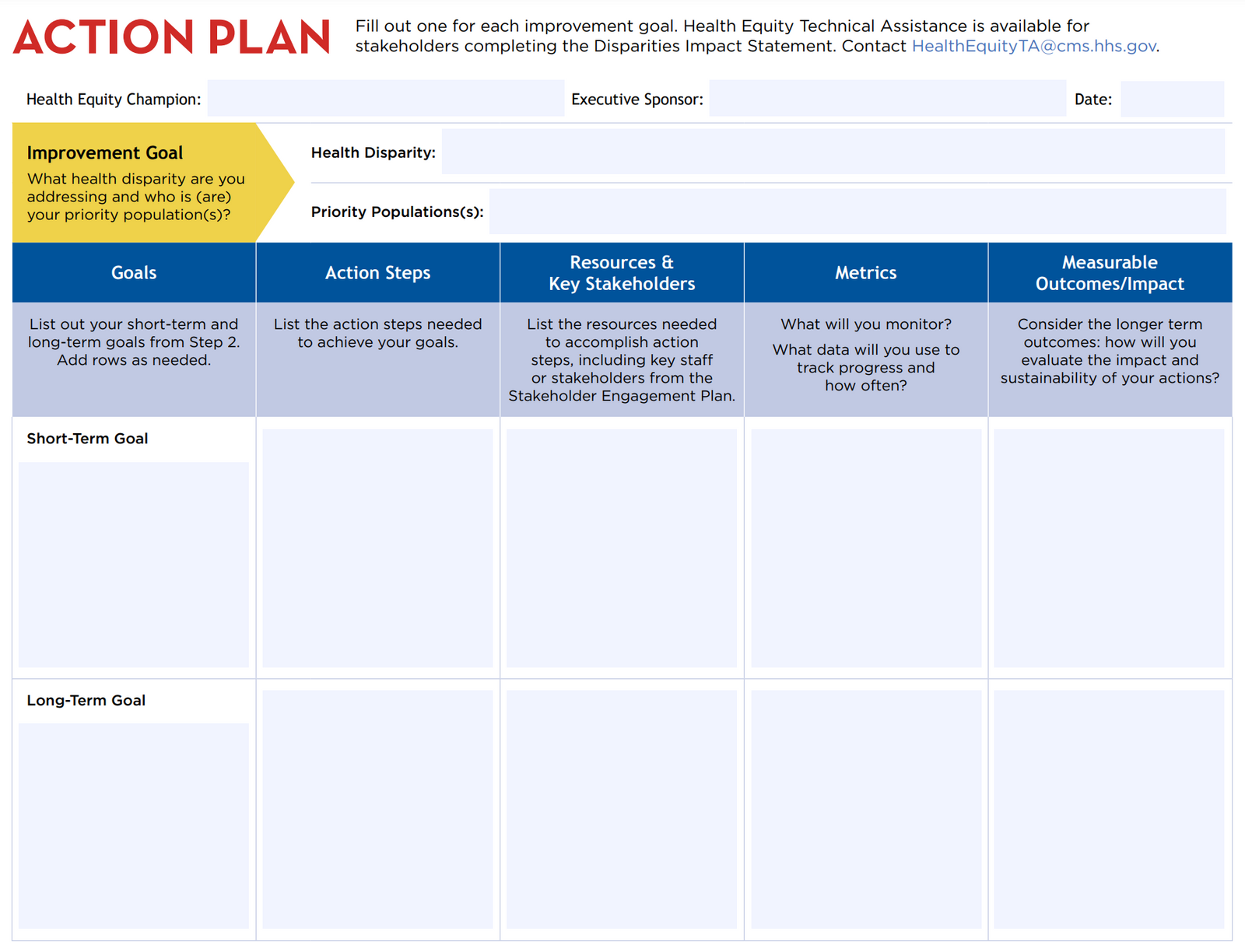
REACH ACOs must develop a Health Equity Plan (HEP) that identifies health disparities and priority populations amongst their beneficiaries. The HEP will be used to define strategies that are expected to reduce these identified health disparities. CMS plans to offer an HEP template based on the CMS Disparities Impact Statement used by the CMS Office of Minority Health.
CMS will adjust the expenditure benchmark of ACOs that serve a higher proportion of underserved beneficiaries. CMS has indicated that the adjustments will be based on a “composite measure that incorporates a combination of the Area Deprivation Index and Dual Medicaid Status...” This new adjustment adds a layer of complexity beyond the single characteristic (dual eligibility) adjustment paradigm used in the Hospital Readmission Reduction Program. As such, the ACO REACH benchmark adjustment will represent CMS’s most comprehensive consideration to date to account for social determinants of health (SDOH). For 2023, CMS plans to increase the monthly capitation payment for the beneficiaries demonstrating the highest 10 percent of social need by $30. Conversely, CMS plans to decrease the monthly capitation payment for the beneficiaries demonstrating the lowest 50 percent of social need by $6.
Participants in the ACO REACH model will collect new information from beneficiaries aimed at monitoring and improving health equity. Specifically, ACOs participating in the REACH model will be required to request certain demographic and social needs data from their enrolled beneficiaries. In PY2023, CMS proposes to reward ACOs for successful reporting of required beneficiary-reported demographic data with a bonus addition to the ACO’s Total Quality Score of up to 10 percentage points, but not to exceed 100 percent. CMS currently plans no downward adjustment for non-submission of this information.
ACO REACH participants will be able to utilize nurse practitioners (NPs) that are Participating Providers or Preferred Providers to order an expanded list of services in order to improve access for the ACO’s beneficiaries. Specifically, NPs in a REACH model ACO may certify a beneficiary’s need for hospice care; certify a beneficiary’s need for diabetic shoes; establish, review, and sign a written care plan for a beneficiary’s cardiac rehabilitation; establish, review, sign, and date a beneficiary’s home infusion therapy plan of care; and make referrals for medical nutrition therapy.
The ACO REACH model will offer the same three participant options as offered under GPDC: Standard, New Entrant, and High Needs Population. The risk sharing options will also mirror those of GPDC. Specifically, ACOs can opt for the lower-risk professional model (50% savings/losses) with primary care capitation or the higher-risk global model (100% savings/losses) with either primary care capitation or total care capitation. Current GPDC participants may either continue participating in the ACO REACH model if they meet the applicable requirements or choose to end participation.
CMS has indicated that it intends for ACO REACH model participants, including providers, to receive the same scope of protection currently available for GPDC participants under the CMS-sponsored model safe harbor of the anti-kickback statute.


Lorem ipsum dolor sit amet, consectetur adipiscing elit. Suspendisse varius enim in eros elementum tristique. Duis cursus, mi quis viverra ornare, eros dolor interdum nulla, ut commodo diam libero vitae erat. Aenean faucibus nibh et justo cursus id rutrum lorem imperdiet. Nunc ut sem vitae risus tristique posuere.
Share this entry: